
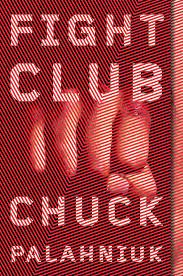
Hello Beautiful People! Welcome back to another review! For this review, I get into a long beloved classic Fight Club by Chuck Palahniuk. I’ll be real, I’ve never seen the movie before, I kind of knew what the premise of the book was, but I soon learned it was way different than I expected. So let’s get into it!
Main Characters:
- Unnamed Main Character: Starts the fight club with his best friend Tyler after the two notice that men need a space to ‘express their emotions’
- Tyler Durden: Bestie to the main character, a very ego-filled, confident man, who’s always looking for how he can get something out of others
- Marla Singer: Tyler’s kind of sort of girlfriend who becomes introduced to the boys when she runs into the main character at a group
My Review
Look I know it’s going to seem a bit wild that with the book released in 1996 and the movie in 1999, I was able to go this long without actually knowing the plot of Fight Club. I always knew the classic line “The first rule about fight club is that you don’t talk about fight club” so I assumed it was just a book about… a fight club. I mean it definitely is, don’t get me wrong on that, but it’s about significantly more than that. I really enjoyed the book and the themes that it focuses on. I also appreciate the humour in the book that often fits how many of us make it through the struggle of living in a world we will never be ‘successful in’ due to large corporations, dominating inflation, and crap-paying jobs. I gave the book an 8.5/10 as I could see why it would be a beloved book. Chuck does something that many people struggle to do which is look at the issues we have created around us through a critical lens.
The book itself while having many scenes of men beating each other in the basements of a bar, really focuses on the theme of toxic masculinity, and how men’s strict worldviews only hurt them. The main character of the book stays relatively unnamed for most of the book. Just the fact that his name is unclear for most of the book paints a lot of the plot going forward in the book and how it inevitably continues. Our unnamed narrator early on tells us how he views himself. By not telling us his name it shows that he sees himself as an insignificant person in his world. A world where he is destined to live pay cheque to pay cheque serving the rich, feeling replaceable and lost in a society that he feels he doesn’t fit into. His desperation to feel something other than sadness and despair becomes more and more clear in the book as we see he enjoys getting his face crushed into pieces night after night just because it’s different then what he feels every day.
The book starts off with the narrator telling us about his habitual visits to severe medical condition support groups. The reason he goes to these groups while having no deadly illness himself is because these groups are a space where you are ‘allowed’ to express emotions and receive empathy and kindness from others, including other men. One of his favourite parts of the groups is when they get to hug each other and cry, but outside of this space, he would never be caught dead expressing emotions in this way, or receiving a hug from especially another man. We see that the character’s inability to express his emotions is extremely unhealthy, and it gets worse as the book goes on.
The main character has an extremely unhinged, and very opposite best friend Tyler Durden who we see gets the main character into a lot of trouble throughout the book. I often wondered why the two were friends but it became clear that Tyler was everything that the main character wanted to be. Tyler is extremely confident, extroverted, and ‘manly’. I can see now why Brad Pitt would have played him in the movie (I didn’t google who Brad played until after I read the book) because I feel like he just fits that vibe well. Tyler is cocky, despite not actually bringing much to the table other than confidence. Our main character as I said is very different from Tyler. He’s more reserved and observant. We see how as the book goes on the main character starts to adopt some of Tyler’s radical views. In these parts, we see a major personality change and it’s more on that toxic side of the spectrum.
The main character’s treatment of Marla Singer in this book is very interesting. Marla, similar to the main character goes to many groups for illnesses she does not have, and that’s how the two meet. It was clear to me early on that he has some sort of further connection to her that he wants to explore despite acting like he hates her. The reason the main character hates Marla is because she exposes what he is, and that’s a fraud. She exposes that he goes to these groups only to be able to have touch and comfort something that’s not ‘manly enough’ to have outside this space. It honestly made me sad for the main character. It’s clear the guy is depressed and doesn’t have a healthy outlet to express it other than these groups. The groups provide him the opportunity to feel something different than the constant sadness and frustration that seems to follow him. At the same time though to a degree Marla’s the only one who understands him on a deeper level. She knows his desperation to be cared for by others, to receive kindness. Despite Marla’s deeper understanding of the characters want to find happiness, her presence (and what she exposes within him) freaks him out enough to run away from his groups.
With the character’s only outlet to express his emotions gone, he needs a new one, and the fight club is born. With Tyler’s help, it soon turns out that many men feel like the only way to get off the things that are dragging them down is by brutally beating another man who consents to being beaten. I found the idea of the fight club to be so interesting because for generations men have been so unwilling to express their emotions and talk out their feelings, due to the rules that men in the past have created, and it resulted in others getting hurt. Instead of talking to a therapist, or crying it out, why not beat another man half to death? Instead of dealing with things like adults, why not start wars? I genuinely do find men to be so interesting. We, women, are raised so differently in terms of being allowed to express ourselves in non-violent ways, and I can’t wrap my head around why men in the past and still to this day continue to do these things. I have never understood combat sports. Why would you want to violently hit each other for thousands to millions of dollars or in this book no dollars (ruining your body and brain in the process) to entertain other men? Why? It makes no sense to me.
Throughout the book, Tyler’s toxic views spread further through the different men who join the club. The issue with spaces like this (not just spaces for men for all genders) is that we get a mob mentality going. Everyone wants to fit in with everyone else so everyone conforms to the views, no matter how radical they get. When the men in the fight club realized the ‘manhood’ that they could project by beating other men they began to cling to Tyler’s every word. It’s clear though that Tyler’s toxic words are very much built-in insecurity. He wants the rest of the men around him to think that they are lower than he is, and must climb to his level. As cofounder of the fight club, his celebrity is quickly rising and his desperation to have the other men in the club cling to his every word is just sad and apparent. The views and the toxicity just worsen throughout the book and more and more insecure men join the club trying to find some sort of manly purpose.
Fight Club is a gritty read. It’s raw and harsh and gives us a look into the mental health battles that men have gone through and continue to go through. I thought the writing style and the language in the book to be really representative of the story. It is brash, harsh, and to the point, which is how many of the men represent themselves in the book. Even one of the men from one of the support groups ends up running a fight club, and it shows that men will often feed into society’s pressures for them rather than listen to what their own hearts and minds need. I can definitely acknowledge that this world that’s painted in Fight Club is apocalyptic, but I think to a degree it’s really not. I mean shit in the last few years we’ve run into a major insurance of ‘Alpha Male’ mentality and toxic masculinity ideologies being reintroduced on a wide scale into the media space. Furthermore, every economy is struggling, and most people my age will never own a home or make enough money to have children. People are struggling to figure out their purpose in the world, and are feeding into radical ideologies to feel like they have some purpose.
***Don’t keep reading if you don’t want the ending spoiled for you***
I won’t say I was super shocked by the ending but I was defiantly surprised. I started to see some signs when the main character was really changing his personality in parts that there may be something else up with him. An important key to the story of the main character is his insomnia. He often doesn’t sleep and even when he does he wakes up exhausted. It turns out that the main character and Tyler are one. The main character suffers from most likely multiple personality disorder and when he sleeps Tyler takes over control of the body. I was a bit confused though when I thought back to other parts where the two were together and interacting if the main character is asleep in these parts or not. He wouldn’t remember the things that Tyler would have him do when he was asleep, but he would remember the things the two did together. That’s why I said he most likely suffers from multiple personality disorder because the part of him having conversations with Tyler made me wonder if it was sycosis of some type. I mean maybe he was asleep in these parts too but I didn’t really get that sense.
I enjoyed the ending to the book because mental health aside the message ended up becoming that not only was Tyler the main character but he was among most of the male characters in the fight club. If anything Tyler was just a manifestation of their anger towards themselves and the world, and by the main character introducing them to him he really just introduced them to parts of themselves that were always there. I hope with my review you don’t get the perspective that I hate men or anything because I defiantly don’t. It just bothers me that men often complain that they can’t express emotions or act a certain way in society (have to be a breadwinner, strong, etc…), but it’s not women who are telling them that, it’s other men. Men have realistically put themselves into a box that is quite hard to get out of, and the only way they know how to get out of it is through anger and violence. If anything this book should be a bit of a testament to how little things have changed since its release, and how if anything we are living in a quite parallel world to that one now. I mean really though one of the most popular sports still continues to be one where men and women step into a ring and beat the shit out of each other, it’s a multibillion-dollar business. So we haven’t yet really found a healthy way to entertain and express ourselves yet.
I hope you enjoyed this review! What did you think of Fight Club by Chuck Palahniuk the first time you read it or watched the movie? Feel free to follow my socials @baddiebookreviews to be kept up to date for when I release a new review!

 Baddie Book Reviews